Section weighing


2 tbsp. (tablespoon) = 1/8 cup.
4 tbsp. (tablespoon) = 1/4 cup.
8 tbsp. (tablespoon) = 1/2 cup.
 Cocoa is the seed of the cacao tree.
 The mango is a fleshy stone fruit belonging to the genus Mangifera, consisting of numerous tropical fruiting trees in the flowering plant family Anacardiaceae. The mango is native to South Asia, from where it has been distributed worldwide to become one of the most cultivated fruits in the tropics. While other Mangifera species (e.g. horse mango, M. foetida) are also grown on a more localized basis, Mangifera indica – the 'common mango' or 'Indian mango' – is the only mango tree commonly cultivated in many tropical and subtropical regions. It is the national fruit of India, Pakistan and the Philippines, and the national tree of Bangladesh.
 Job 's Tears ( Coix lacryma-jobi ), Coixseed, Tear Grass, Hato Mugi, adlay, or adlai, is a tall grain-bearing tropical plant of the family Poaceae (grass family) native to Southeast Asia but elsewhere cultivated in gardens as an annual. It has been naturalized in the southern United States and the New World tropics. In its native environment it is grown in higher areas where rice and corn do not grow well. Job's Tears are also commonly sold as Chinese pearl barley in Asian supermarkets, although C. lacryma-jobi is not closely related to barley (Hordeum vulgare).
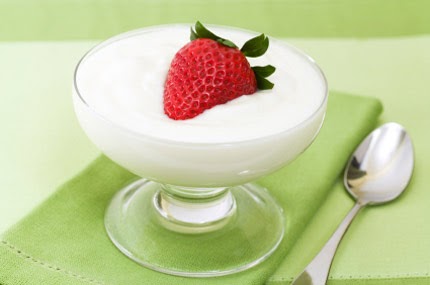 Yogurt or yoghurt or yoghourt (/ˈjoʊɡərt/ or /ˈjɒɡərt/; other spellings listed below) is a fermented milk product (soy milk, nut milks such as almond milk, and coconut milk can also be used) produced by bacterial fermentation of milk. The bacteria used to make yogurt are known as "yogurt cultures". Fermentation of lactose by these bacteria produces lactic acid, which acts on milk protein to give yogurt its texture and its characteristic tang.
 Coriander ( Coriandrum sativum ), also known as cilantro, Chinese parsley or dhania, is an annual herb in the family Apiaceae. Coriander is native to regions spanning from southern Europe and North Africa to southwestern Asia. It is a soft, hairless plant growing to 50 cm (20 in) tall. The leaves are variable in shape, broadly lobed at the base of the plant, and slender and feathery higher on the flowering stems. The flowers are borne in small umbels, white or very pale pink, asymmetrical, with the petals pointing away from the centre of the umbel longer (5–6 mm) than those pointing towards it (only 1–3 mm long). The fruit is a globular, dry schizocarp 3–5 mm (0.12–0.20 in) in diameter.
 Milk is a white liquid produced by the mammary glands of mammals. It is the primary source of nutrition for young mammals before they are able to digest other types of food. Early-lactation milk contains colostrum, which carries the mother's antibodies to the baby and can reduce the risk of many diseases in the baby. It also contains many other nutrients.
 Honey / ˈ h ʌ n i / is a sweet food made by bees using nectar from flowers. The variety produced by honey bees (the genus Apis) is the one most commonly referred to, as it is the type of honey collected by beekeepers and consumed by humans. Honey produced by other bees and insects has distinctly different properties.
.bmp)
 Chrysanthemums, often called mums or chrysanths, are perennial flowering plants of the genus Chrysanthemum in the family Asteraceae which are native to Asia and northeastern Europe. About 30 species have been described. Florists sometimes abbreviate the spelling to "xants".
 The pomegranate / ˈ p ɒ m ɨ ɡ r æ n ɨ t /, botanical name Punica granatum, is a fruit -bearing deciduous shrub or small tree growing between 5–8 metres (16–26 ft) tall.
 The lemon ( Citrus × limon ) is a small evergreen tree native to Asia, and the tree's ellipsoidal yellow fruit. The fruit is used for culinary and non-culinary purposes throughout the world, primarily for its juice, though the pulp and rind ( zest ) are also used in cooking and baking. The juice of the lemon is about 5% to 6% citric acid, which gives lemons a sour taste. The distinctive sour taste of lemon juice makes it a key ingredient in drinks and foods such as lemonade.


 The coconut palm (also, cocoanut), Cocos nucifera, is a member of the family Arecaceae (palm family). It is the only accepted species in the genus Cocos. The term coconut can refer to the entire coconut palm, the seed, or the fruit, which, botanically, is a drupe, not a nut. The spelling cocoanut is an archaic form of the word. The term is derived from 16th-century Portuguese and Spanish coco, meaning "head" or "skull", from the three small holes on the coconut shell that resemble human facial features.
