
Nypa fruticans, commonly known as the nipa palm, is a species of palm native to the coastlines and estuarine habitats of the Indian and Pacific Oceans. It is the only palm considered adapted to the mangrove biome. This species is the only member of its genus Nypa which is in turn, the only member of the subfamily Nypoideae forming monotypic taxa.
The nipa palm has a trunk that grows beneath the ground and only the leaves and flower stalk grow upwards above the surface. Thus, it is an unusual tree, and the leaves can extend up to 9 m (30 ft) in height. The flowers are a globular inflorescence of female flowers at the tip with catkin-like red or yellow male flowers on the lower branches. The flower yields a woody nut, these arranged in a cluster compressed into a ball up to 25 cm (10 in) across on a single stalk. The ripe nuts separate from the ball and are floated away on the tide, occasionally germinating while still water-borne.
Nypa fruticans is also known as attap (Singapore), nipa (Philippines), buah atap (Indonesia), buah nipah (Malaysia), dừa nước (Vietnam), ging pol (Sri Lanka), gol pata (West Bengal, Bangladesh), and dani (Burma).
Nipa palms grow in soft mud and slow-moving tidal and river waters that bring in nutrients.
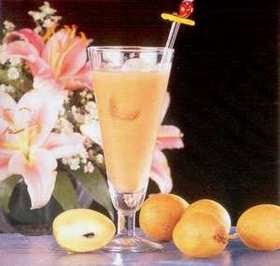 Ingredient
Sapodilla 2 cups
Syrup 1 cup
Boiled water 3 cups
Salt
How do
Wash Sapodilla thoroughly. Slice the peeled fruit is just meat
Ingredient
Sapodilla 2 cups
Syrup 1 cup
Boiled water 3 cups
Salt
How do
Wash Sapodilla thoroughly. Slice the peeled fruit is just meat.
Put the blender. Syrup boiled water. a
nd a little salt.
Blended thoroughly. Flavors and seasonings to your taste.
The fridge or drinks with ice.
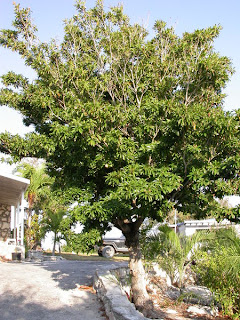 Manilkara zapota, commonly known as the sapodilla, is a long-lived, evergreen tree native to southern Mexico, Central America and the Caribbean. An example natural occurrence is in coastal Yucatán in the Petenes mangroves ecoregion, where it is a subdominant plant species. It was introduced to the Philippines during Spanish colonization. It is grown in huge quantities in India, Thailand, Malaysia, Cambodia, Indonesia, Bangladesh and Mexico.
The name "zapota" ultimately derives from the Nahuatl word tzapotl ['t͡sapot͡ɬ] by way of the Spanish word zapote [sa'pote].
Sapodilla can grow to more than 30 m (98 ft) tall with an average trunk diameter of 1.5 m (4.9 ft). The average height of cultivated specimens, however, is usually between 9 and 15 m (30 and 49 ft) with a trunk diameter not exceeding 50 cm (20 in). It is wind-resistant and the bark is rich in a white, gummy latex called chicle. The ornamental leaves are medium green and glossy. They are alternate, elliptic to ovate, 7–15 cm long, with an entire margin. The white flowers are inconspicuous and bell-like, with a six-lobed corolla. An unripe fruit has a firm outer skin and when picked, releases white chicle from its stem. A fully ripened fruit has saggy skin and does not release chicle when picked.
The fruit is a large ellipsoid berry, 4–8 cm in diameter, containing two to five seeds. Inside,
 Ingredient
Dried longan 2 cups
Sugar 2 cups
Boiled water 3 cups
How do : วิธีทำ
The pot boiled dried longan
Ingredient
Dried longan 2 cups
Sugar 2 cups
Boiled water 3 cups
How do : วิธีทำ
The pot boiled dried longan. add
Boil the sugar until the sugar dissolves.
Seasonings to your taste.
Wait for the water Longan cold. Drink with ice.
 Ingredient
Fresh longan 2 cups
Syrup 2 cups
Boiled water 3 cups
How do
Wash fruit thoroughly. Peeled longan meat
Ingredient
Fresh longan 2 cups
Syrup 2 cups
Boiled water 3 cups
How do
Wash fruit thoroughly. Peeled longan meat, sheep
meat only. add
Syrup boiled water to thoroughly blended.
Seasonings to your taste.
The fridge or drinks with ice.
Nutritious
- Longan
Vitamin C, protein, calcium and phosphorus.
Juice of fruit same kind
- Longan juice boil
More information
-
Longan
 Dimocarpus longan, commonly known as the longan is a tropical tree that produces edible fruit. It is one of the better known tropical members of the soapberry family to which the lychee also belongs. It is native to the Indomalaya ecozone defined by South Asia and Southeast Asia.
The Dimocarpus longan tree can grow up to 6 to 7 meters in height, and the plant is very sensitive to frost. Longan trees require sandy soil and temperatures that do not typically go below 4.5 degrees Celsius (40.1 degrees Fahrenheit). Longans and lychees bear fruit at around the same time of the year.
The longan (龍眼lóng yǎn , lit. "dragon eye"), is so named because it resembles an eyeball when its fruit is shelled (the black seed shows through the translucent flesh like a pupil/iris). The seed is small, round and hard, and of an enamel-like, lacquered black. The fully ripened, freshly harvested shell is bark-like, thin, and firm, making the fruit easy to shell by squeezing the fruit out as if one is "cracking" a sunflower seed. When the shell has more moisture content and is more tender, the fruit becomes less convenient to shell. The tenderness of the shell varies due to either premature harvest,


